
Hispanic Theological Association
A member since 1981. ATH evaluates and endorses educational institutions. The Bachelor in Christian Ministry program carries its endorsement.
athispana.orgThe College
Facultad Bible College is committed to those who seek theological education in support of a ministerial calling, and to those who see it as the foundation for graduate study.
47years of training
Mission and vision
Facultad Bible College exists for the benefit of the Church, providing a formal, Bible-centered theological education to all who have been called by God to ministry, within the context of their culture and language.
The College is committed to developing those who are called to ministry by cultivating a healthy biblical and theological worldview, cultural competence, academic excellence, and lifelong learning.
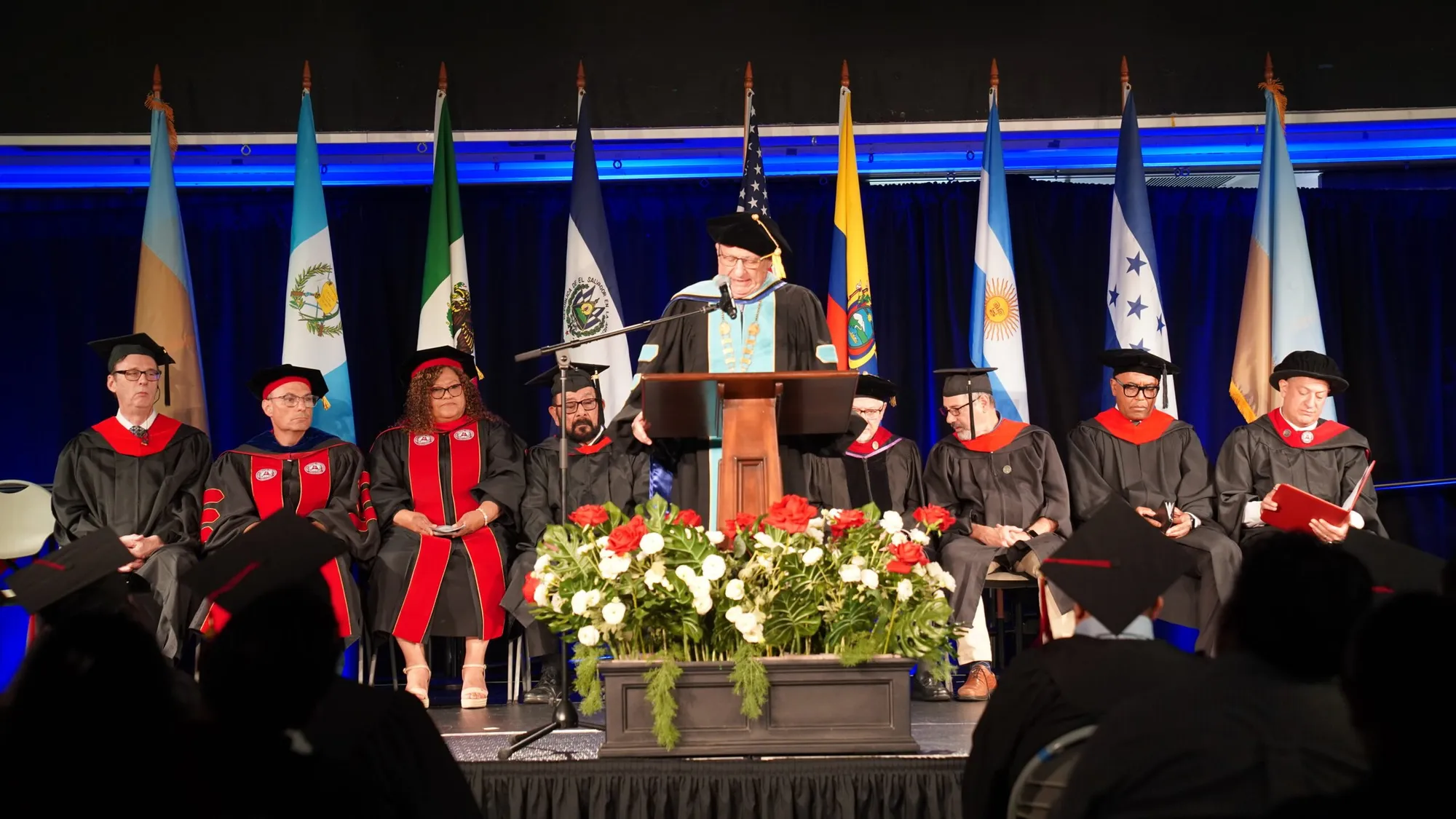
A distinctive mark of the College is its bilingual program, which allows study in Spanish or English within a context that focuses on spiritual life and respects the student’s cultural world.
Origins
From a contextual vision to an institution serving the Hispanic community
1973
During the second week of October, a conviction begins to take shape: the Hispanic evangelical community needed formal theological education in Spanish, academically serious and rooted in its own context.
1974
In dialogue with leaders of the University, the name Facultad de Teología emerges. More than a label, it expressed cultural respect, theological seriousness, academic commitment, and ministerial credibility. On September 9 an initial class is taught in Spanish, still without the structure of an official program.
1976
Professor Enrique Zone opens classes in Spanish for the Hispanic evangelical community within LIFE Bible College and in the historic 500 Room of Angelus Temple.
1978
In search of a curriculum suited to the educational needs of the Hispanic and urban community, the College is established autonomously under the leadership of Enrique Zone, its founder and first president.
1979
The College obtains permanent use of the Beverly Blvd. Foursquare Church campus in Montebello, where it continues to serve to this day.
1981
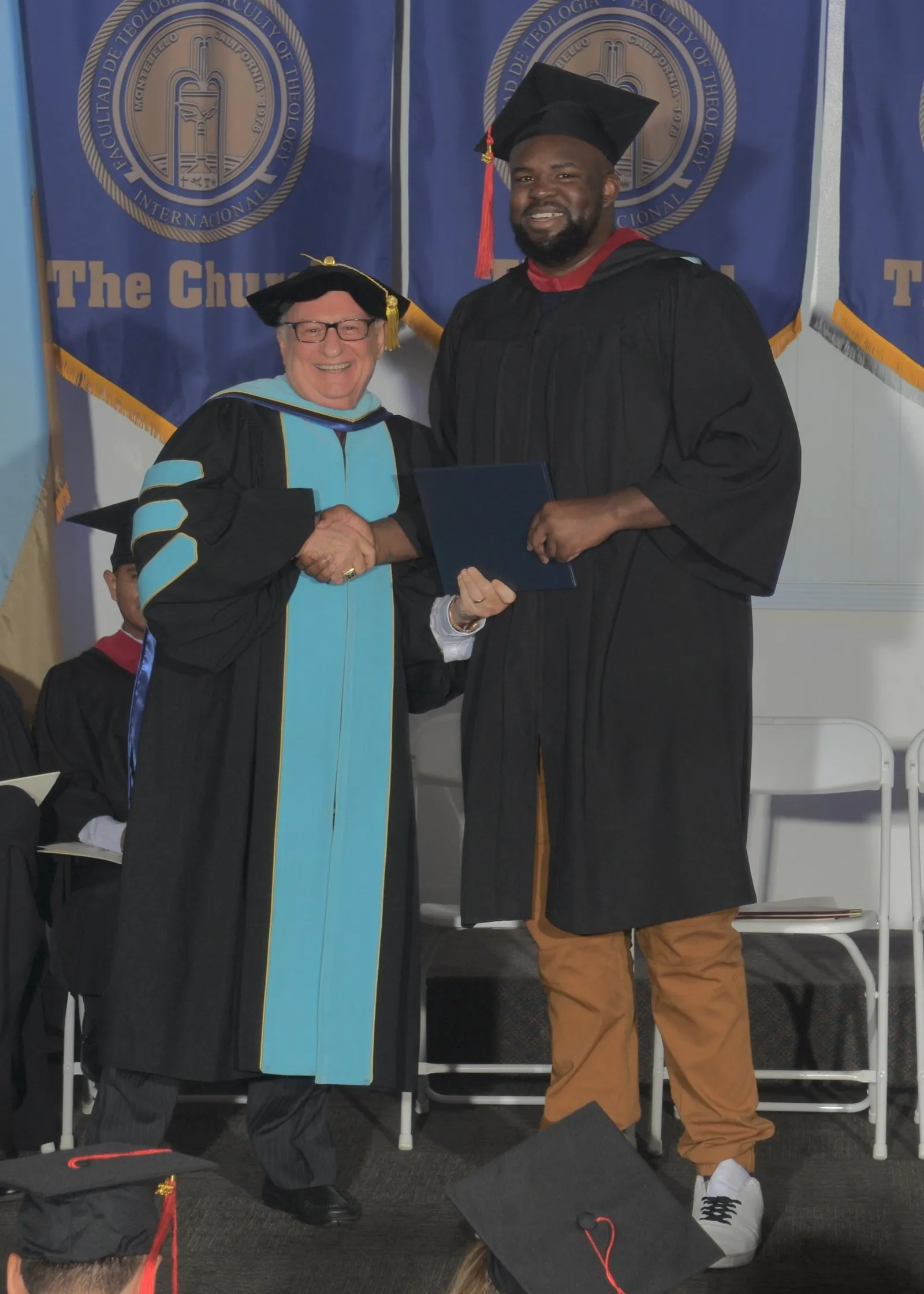
On June 22 the pioneering class graduates: twelve students. That same year, the International Foursquare Board officially recognizes the College retroactively, and the institution joins the Hispanic Theological Association.
1982
The Hispanic Theological Association certifies the Ministerial Diploma: the first external endorsement of the College’s academic work.
1986
The Bachelor in Christian Ministry receives the endorsement of the Hispanic Theological Association.
2026
The College offers the Master in Biblical Theology, the Bachelor in Christian Ministry, and the Associate in Christian Ministry, in Spanish and English, along with a leveling track for pastors with ministerial experience.
Recognition
A member since 1981. ATH evaluates and endorses educational institutions. The Bachelor in Christian Ministry program carries its endorsement.
athispana.orgThe College operates under educational code 94393B of the State of California.
Graduates of the College may apply for the ministerial credentials issued by the denomination.
Those who complete their programs may continue graduate studies at accredited universities and seminaries in Southern California.
Educational code94393B
Objectives
The College exists to form leaders prepared spiritually, academically, and ministerially to serve Christ, the Church, and society, in local and global contexts.
To form leaders rooted in Christ and His Word, with a life of prayer, discipline, and sensitivity to the work of the Holy Spirit.
To prepare ministers qualified in pastoral, evangelistic, missiological, administrative, and teaching work.
To equip pastors, missionaries, evangelists, teachers, and lay leaders by integrating biblical knowledge with ministry practice.
To promote formation that values cultural diversity and seeks unity in Christ among people of different nations, cultures, and languages.
Values
01
Scripture is the final authority and the only infallible rule of faith and practice. Everything we teach begins there.
02
We train those God has already called. The calling precedes the program and shapes the purpose of every course.
03
We exist for the local church. What a student learns on Saturday is applied in their congregation on Sunday.
04
Everyone with a calling has the right to be trained in their own culture and language, without giving up either one.
05
Real rigor. Professors with graduate degrees and years of active ministry, serious evaluation, and verifiable academic work.
Admissions open2026 / 2027
Classes began in August and September, and cohorts close once they reach capacity. If you are considering the step, let us talk: we will tell you where there is room and when the next cohort opens.